


Blog Summary: The packaging printing industry is changing rapidly, shaped by sustainability mandates, consumer demand for personalization, and advances in digital and AI-driven production technology. This guide covers the key trends and technologies defining packaging printing in 2026, with practical context for print businesses looking to stay competitive and grow their client base.
For packaging print businesses, staying competitive means more than producing high-quality prints. It means understanding what buyers want next and having the operational capability to deliver it.
Demand for innovative, sustainable, and personalized packaging is growing across virtually every consumer category. Print providers that keep pace with these shifts, supported by capable web-to-pack solutions, are better positioned to attract new clients, reduce operational costs, and differentiate their services in a crowded market.
This guide covers the trends and technologies shaping packaging printing in 2026, starting with a snapshot of where the industry stands today.
What Does the Current Packaging Printing Landscape Look Like?
The packaging printing industry is on a strong and sustained growth trajectory. According to Mordor Intelligence, the market is valued at USD 468.95 billion in 2026 and is projected to reach USD 685.28 billion by 2031. This growth reflects how packaging has evolved from a functional necessity into a strategic medium for brand communication, sustainability storytelling, and consumer engagement.
Digital printing has been a key driver of this expansion, offering the agility to handle short-run jobs, faster turnarounds, and personalized designs that align with today's customization-driven market demands.
Two forces are propelling the industry forward: the continued surge in ecommerce, which has made packaging a critical part of the customer experience, and advances in print automation, which are making high-quality, flexible production more accessible and cost-efficient for print businesses of all sizes.

Now that we have clarified where exactly the package printing industry stands, we can finally look at the top trends that might redefine the course.
What Are the Key Trends Driving the Future of Packaging Printing?
Evolving technology is expanding what is possible in packaging printing, from creative design and sustainable materials to smarter production workflows that help tackle the packaging challenges. Here are the trends that are actively shaping the industry for print service providers in 2026.
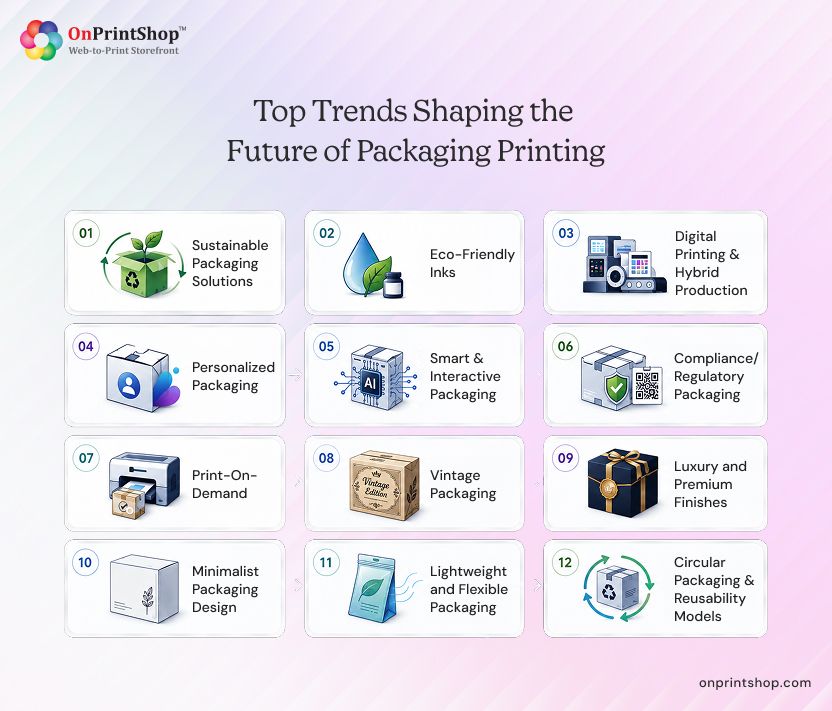
Sustainability First: The Rise of Biodegradable Packaging Solutions
Sustainable packaging has moved from a niche preference to a mainstream business requirement. Print businesses are increasingly expected to offer biodegradable and recyclable packaging options, not just as an ethical position but as a practical response to client demand and tightening environmental regulations.
Choosing smarter substrates and reducing material waste improves production efficiency while lowering costs, benefits that pass through to clients. For packaging print providers, adopting sustainable materials is both an operational improvement and a competitive differentiator, particularly when targeting brands with documented sustainability commitments.
Printing Green: How Eco-Friendly Inks Are Changing the Game
Eco-friendly inks, including those derived from soy, algae, and other natural materials, emit significantly fewer volatile organic compounds (VOCs) than conventional petroleum-based inks, making them safer for consumers and production staff alike.
Brands with active carbon reduction programs, including major consumer goods companies, are already integrating bio-based inks into their packaging specifications. For print providers, offering eco-certified ink options is increasingly a prerequisite for working with sustainability-focused clients, not just a value-add.
Digital Packaging Printing: Faster, Smarter, and More Flexible Production
Digital printing is rapidly transforming packaging production by making short-run, high-quality printing more efficient and cost-effective. Unlike traditional printing methods that require plates and lengthy setup processes, digital presses enable faster turnaround times, reduced setup costs, and greater flexibility for customized packaging orders.
Modern inkjet and hybrid printing technologies now deliver print quality comparable to conventional flexographic printing while supporting variable data, seasonal packaging, and limited-edition campaigns with minimal production delays. For print providers, digital packaging printing creates new opportunities to serve ecommerce brands, startups, and businesses that require agile packaging production without large inventory commitments.
Personalized Packaging: Creating One-of-a-Kind Brand Experiences
Personalized packaging has become a primary tool for brand differentiation. With products competing for attention on both physical shelves and digital storefronts, distinctive packaging design directly influences purchase decisions. Brands use personalized messaging, tailored aesthetics, and custom print runs to create an immediate connection with their target audience.
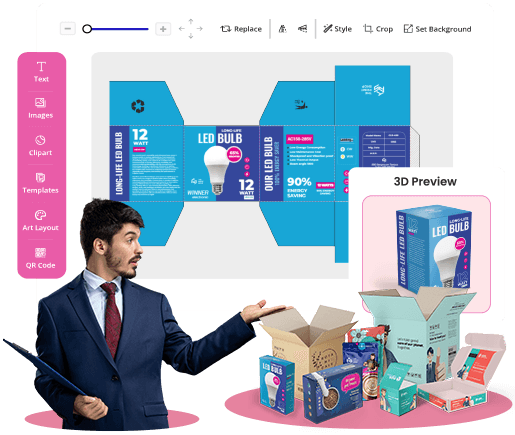
Advanced web-to-print technology and AI-powered design studios have made personalized packaging accessible beyond large brands. Individuals and small businesses can now design custom packaging for events, gifting, or product launches with minimal friction, opening a significant opportunity for print providers that offer self-service online ordering.
Smart Packaging: Blending Innovation with Interactivity
Smart packaging integrates digital technologies, including RFID tags, QR codes, and NFC sensors, directly into printed packaging to create interactive consumer experiences and improve supply chain visibility.
For brands, this adds a layer of engagement that standard print cannot offer. For print businesses, offering smart packaging production requires integration with technology partners but opens access to clients in retail, food and beverage, healthcare, and logistics who are actively investing in connected packaging solutions.
Compliance-Ready Packaging: Meeting Global Regulatory Standards
As packaging regulations continue to evolve across global markets, brands are placing greater emphasis on compliance-ready packaging solutions that support traceability, sustainability reporting, and consumer transparency. Industries such as food, healthcare, cosmetics, and retail increasingly require packaging that includes serialized labels, QR codes, ingredient disclosures, and recycling information, and common types of labels shows where compliance and regulatory labels sit among the other label categories.
Technologies like digital product passports and connected packaging systems are helping brands meet these regulatory expectations while improving customer trust. For packaging print providers, offering compliance-focused printing capabilities creates opportunities to work with export-oriented and highly regulated industries that demand accurate, scalable, and standards-compliant packaging production.
Print-On-Demand: Short-Run and Market-Ready Orders
Print-on-demand has become a practical model for startups and small businesses that need packaging flexibility without the risk of excess inventory. By producing only after an order is placed, businesses reduce upfront investment and material waste significantly.
Modern web-to-print storefronts support seamless collaboration with trade printers via API integrations, enabling faster fulfillment and a broader product catalog. With dropshipping support built in, businesses can operate with leaner logistics while still delivering market-ready packaging on demand.
The Comeback of Vintage Packaging: Nostalgia Meets Modern Design
Gen Z’s love for nostalgia is undeniable. From retro fonts and grainy textures to vintage-inspired graphics, this aesthetic is making a strong comeback in packaging design. Brands are cleverly blending these old-school visuals with modern layouts and vibrant colors, creating packaging that feels both familiar and fresh.
This approach doesn’t just attract younger consumers who find nostalgia stylish and authentic, but also captivates older audiences who appreciate the vintage charm. Some brands are even adding interactive twists like gamified unboxing to make the experience more shareable and memorable.
Luxury in Every Detail: Premium Finishes that Elevate Packaging
Premium packaging finishes, including embossing, foil stamping, spot UV coating, and soft-touch laminates, create tactile and visual qualities that consumers associate with product quality and brand prestige. As unboxing has become a documented part of the customer experience, particularly in ecommerce, the perceived value of premium packaging directly influences purchase intent and brand loyalty.
For print businesses, offering a range of specialty finishes expands the value of each order and appeals to clients in cosmetics, luxury goods, spirits, and premium food categories.
Less Is More: The Growing Appeal of Minimalist Packaging Design
Minimalist packaging, characterized by clean layouts, restrained typography, and limited color palettes, has gained strong traction among eco-conscious and premium consumer segments. The appeal lies in its ability to communicate quality, transparency, and brand confidence without visual clutter.
Brands in skincare, technology, and luxury goods have led this shift, with companies like Apple setting a widely recognized benchmark for minimal, high-quality packaging. For print providers, minimalist work demands precision in color accuracy and substrate quality, making it an area where production capability differentiates suppliers.
Lightweight and Flexible Packaging: Designed for Modern Lifestyles
Lightweight and flexible packaging formats, including resealable pouches, squeezable tubes, and flexible films, have grown in adoption across food, beverage, and personal care categories. The appeal is practical: lower material costs, reduced shipping weight, easier storage, and alignment with sustainability goals through lower overall material consumption.
For packaging print businesses that face cross-border shipping challenges while serving international clients that ship cross-border or at high volume, flexible packaging formats represent a meaningful cost-saving opportunity that strengthens client relationships.
Circular Packaging Models: Reducing Waste Through Reusability
The packaging industry is steadily moving toward circular economy models that focus on reducing waste through recyclable, reusable, and refillable packaging systems. Brands are actively exploring mono-material packaging, reusable shipping containers, and refill-based product packaging to minimize environmental impact and meet sustainability goals.
For print businesses, supporting circular packaging initiatives means adapting production workflows to accommodate durable substrates, recyclable materials, and packaging designs optimized for multiple use cycles. As more businesses commit to long-term sustainability targets, packaging providers that align with circular production practices are better positioned to build stronger partnerships with environmentally conscious brands.

As packaging trends continue to evolve, technology stands at the heart of this transformation. From creating eco-friendly materials to enabling faster, smarter, and more personalized printing, innovation is reshaping every stage of packaging production. Let’s explore the key technologies driving this new era of packaging printing.
Key Technologies Driving the Packaging Printing Industry
Technology is at the core of every major packaging trend in 2026, from enabling sustainable production to delivering personalized designs at scale. Here are the key technologies reshaping packaging print operations.
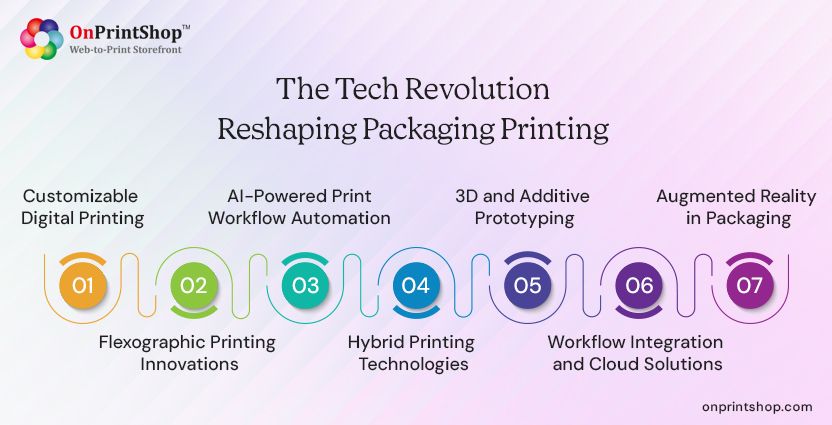
Fast and Highly Customizable Digital Printing
Digital printing combined with a robust web-to-print solution for personalized products allows short runs and quick turnarounds while enabling personalization. This flexibility is transforming packaging production, helping brands meet fast-changing packaging industry trends and deliver customized, on-demand designs efficiently.
Flexographic Printing Innovations for High-volume Production
Modern flexographic techniques enhance speed, consistency, and print quality for large runs. This keeps high-volume packaging cost-effective while maintaining superior visuals across diverse substrates.
AI-Powered Print Automation for Smarter Workflows
Using AI-driven web-to-pack platforms to automate critical production tasks, including color management, job scheduling, and error detection before a job reaches the press. This reduces manual intervention, lowers the rate of reprints and material waste, and improves consistency across high-volume packaging runs. For print operations managing complex client requirements across multiple substrates, AI-based quality control is a meaningful operational upgrade.
Hybrid Printing Technologies Combining Digital and Traditional Printing
Hybrid printing merges digital agility with traditional methods, allowing printers to handle both short-run custom jobs and high-volume projects. This versatility is reshaping packaging production capabilities.
3D and Additive Printing for Error-free Prototyping
3D printing allows packaging designers and brands to test structural and visual concepts in physical form before committing to full production runs. By integrating 3D prototyping with smart online design studio tools, print businesses can significantly reduce design approval cycles, minimize costly errors, and accelerate time to market for new packaging formats.
Workflow Integration and Cloud Solutions for Efficient Production
Cloud-based print workflow automation connects design, prepress, production, and fulfillment into a unified system. For packaging print businesses, this means fewer handoff errors, better job visibility across teams, and the ability to manage multi-site or remote production operations without loss of coordination.
As client expectations for turnaround speed increase, integrated cloud workflows are becoming a baseline operational requirement.
Augmented Reality (AR) in Packaging
AR-enabled packaging allows consumers to scan printed surfaces and access digital content, such as product tutorials, brand storytelling, or interactive promotions.
Beyond the consumer experience, AR-enhanced packaging generates social sharing and repeat engagement that extends the marketing value of each print run.
For print service providers, offering AR-integrated packaging positions them as full-service partners for brand-building, not just production vendors.
ConclusionThe packaging printing industry in 2026 is defined by the intersection of sustainability, personalization, and production technology. Biodegradable materials, eco-friendly inks, digital printing, AI-driven automation, and AR-enhanced packaging are not future considerations; they are active client requirements shaping purchasing decisions today.Print businesses that align their capabilities with these trends gain real operational advantages: lower waste, faster turnaround, broader product offerings, and stronger client retention. The market still has substantial room for growth, which means the window for positioning your business as a capable, forward-thinking packaging partner remains open.OnPrintShop's next-gen web-to-pack solutions are built to support print businesses through this evolution, from online storefront management and AI-powered workflow automation to design customization and ecommerce integration. To see how the platform applies to your specific operation, book a live demo with OnPrintShop today.