


Summary: Seamless integrations create a single source of truth by connecting different systems across the print workflow, turning fragmented processes into end-to-end automated ecosystems. This comprehensive blog delves into how these integrations redefine the future of print automation and how it impacts day-to-day workflows and business growth.
Since today’s print businesses don’t operate in isolation, seamless integrations are the future of print automation.
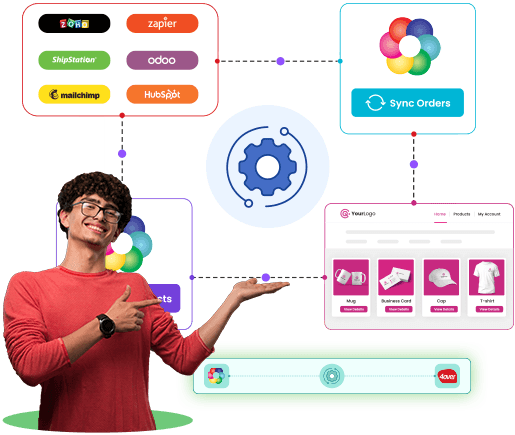
To be more precise - print businesses rely on multiple systems that need to be connected and work together in real-time. By transforming disconnected tools into a coordinated system, integrations help to reduce manual work, enabling faster, accurate, and scalable print operations.
A modern print workflow automation software can help print businesses automate print operations from start-to-end with the help of integrations. It does this by connecting every stage of the print lifecycle into a continuous flow.
As per research, the print market is currently valued at USD 70.06 billion in 2026 and is anticipated to reach USD 88.78 billion by 2031, rising at a CAGR of 4.85% during the forecast period (2026-2031).
As per research, the global custom printing market is estimated to reach USD 68.46 billion by 2030. As this market continues to expand, print businesses must adopt integrated and automated workflows to efficiently manage growing order volumes and customer expectations.
Keep reading to explore how integrations power end-to-end print workflow automation, enabling printers to reduce complexity in print operations and deliver enhanced customer experience. Let’s begin.
How AI Elevates Integrated Print Workflows
AI elevates print workflows by utilizing data from integrated print systems to predict issues before time and enables making better decisions. It goes a step beyond simple and rule-based processes, making workflows smarter, faster, and more adaptive. Let’s see how it does this in action.
1. From Connected Systems to Intelligent Automation
Ordinary integrations serve the purpose of sharing data from one system to another. By utilizing trending AI tools for print businesses, this process gets stepped up, enabling printers to automate complex tasks. Let’s say if a customer places a bulk order, the integration helps to move the order to production, while AI checks machine availability, paper stock, and helps with production scheduling.
2. AI-Driven Decision Making Across Integrated Platforms
The AI-based systems utilize data from the connected systems to predict possible issues and help make better decisions. Let’s say if a large-format job causes delay during peak hours, AI automatically predicts the bottleneck, reroutes jobs to another machines, providing customers with realistic delivery dates.

3. Eliminating Manual Touchpoints with AI Integrations
AI-powered integrations reduce repetitive and manual tasks such as data entry and status updates, automating operations at every stage. This reduces turnaround times, improves order accuracy by minimizing human errors, and allows printers to scale without increasing operational overload.
Key Integration Types Driving Print Automation Forward
To make the maximum ROI of your print automation by AI implementation, businesses must understand the types of integrations that connect multiple systems, remove redundancies, and streamline end-to-end workflows. Below are the key integration types that drive modern print automation.
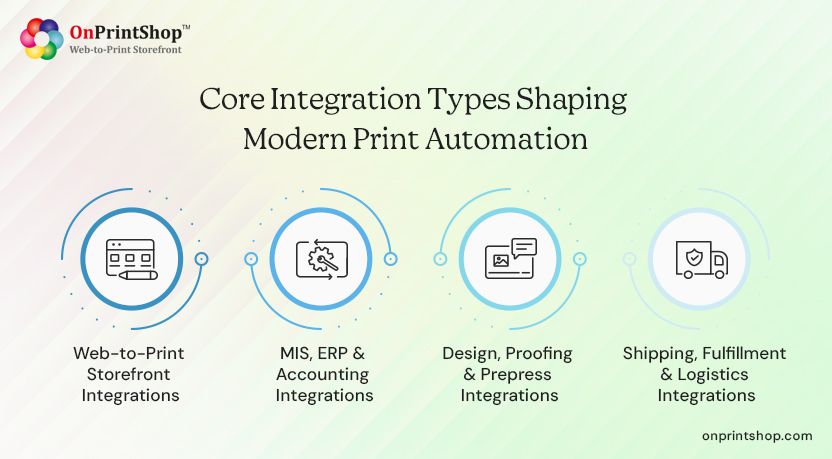
1. Web-to-Print Storefront Integrations
W2P integrations connect storefronts with systems like MIS, production, and fulfillment tools to ensure that the data of print products, pricing, design templates, and orders stay synchronized in real-time.
Let’s say if a B2B print buyer places a bulk order on the smart web-to-print storefront, the order information flows directly into the production without any manual operation.
This gives printers the flexibility to run multiple storefronts while managing everything from a single place.
2. MIS, ERP & Accounting Integrations
By integrating MIS, ERP, and accounting systems, printers can get a centralized view of costs and business performance.
If a job detail has been entered into one system, this data can be synced across different systems and reused for performing tasks like estimating, job tracking, invoicing, and others.
For example, these integrations can allow you to automatically generate an invoice and update financial records on completion of a print job.
3. Design, Proofing & Prepress Integrations
From uploading print files to achieving print-ready output, design, proofing & prepress, these integrations powered by intelligent design proofing software can deliver a streamlined journey. These integrations allow designs to move smoothly through various steps including proofing, approvals, and preflight checks.
If a customer uploads a business card, personalizes the design, previews it, and approves it online, the integration automates the process of checking print readiness and sends the file into production.
4. Shipping, Fulfillment & Logistics Integrations
The final stage of the print workflow can be streamlined with the help of shipping, fulfillment, and logistics integrations.
From selecting the best carrier and generating shipping labels to sharing tracking details in real time, know how print integrations act as the real disruptor and implement it by automating and managing the entire shipping workflow.
For example, if an order is packed, the system automatically generates a shipping label of the order and sends it to both customers and teams, improving the accuracy of the delivery and speeding up the dispatch process.
What Print Leaders Should Look for in an Integration-Ready Solution
When choosing an integration-ready solution, print leaders must not only consider the current needs but also think about long-term scalability. In this section, let’s explore in detail on how to make a strategic decision.
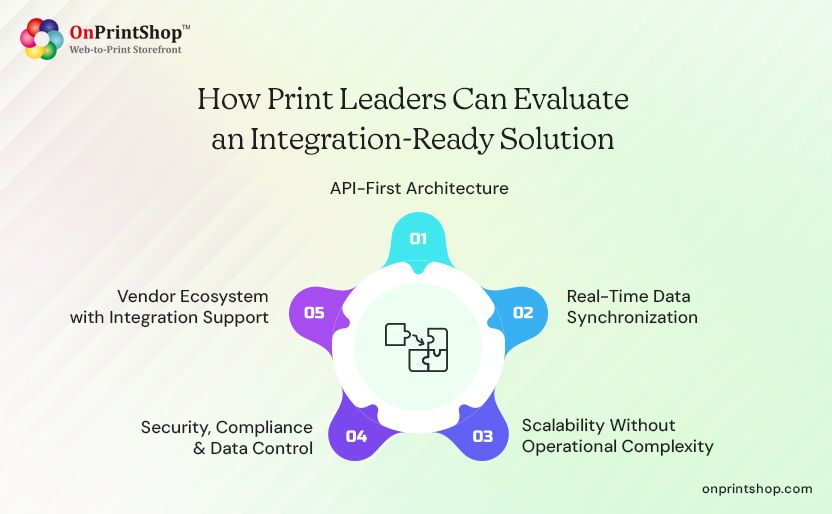
1. API-First Architecture
An API-first platform ensures effortless connectivity between different systems including web-to-print storefronts, MIS, ERP, shipping, and accounting systems. API-first architecture are faster to implement and easier to maintain, thus enable print businesses to operate more efficiently.
2. Real-Time Data Synchronization
The syncing of data in real-time allows print businesses to eliminate errors and delays caused due to batch processing or manual updates. Synchronized data about orders, print job statuses, inventory statuses, and changes in pricing, ensure consistency in operations and faster decision-making.
3. Scalability Without Operational Complexity
Whether increasing product line, reaching more customers, launching new storefronts, an integration-ready solution should allow print businesses to easily scale without any operational complexity. Growth can be automated with the right platform, eliminating the need for any administrative effort.
4. Security, Compliance & Data Control
The integrated-ready solution must support the exchange of data via secured methods like authentication, encryption, and controlled access. Check if it offers role-based permissions for accessing data, while enabling printers meet compliance requirements and have control over sensitive information.
5. Vendor Ecosystem with Integration Support
A strong vendor ecosystem with a network of technology partners, pre-built integrations, and tools that can easily connect with the integration-ready solution can add long-term value to it. This allows the platform to evolve alongside the changing print business demands without much effort.
Compare the integration capabilities of the top web-to-print software solutions to evaluate which ecosystem best supports your business.
Wrapping It Up!Integrations are powering the next generation of print automation they enable fully automated and data-driven workflows. By creating a single source of truth, it provides a foundation for automation and AI to enhance decision-making, scale print operations, and adapt to future business demands.Utilizing advanced web-to-print integrations offered by reliable web-to-print solution provider like OnPrintShop can help print businesses to automate their print operations from start to end and scale effortlessly.If you want to know more about OnPrintShop, then request a demo with us today and our team will offer a personalized demonstration tailored to your unique print business requirements. So, go ahead and book a demo now!