



Blog Summary: Still spending hours on manual quotes? Print estimating software can cut quote turnaround from hours to minutes, protect your profit margins, and scale your business faster. This guide covers everything you need to make the right buying decision in 2026.
The print industry is under pressure. Buyers expect instant quotes, wafer-thin margins leave little room for error, and manual spreadsheet-based estimating simply cannot keep up. The modern print estimating software solves this by automating the entire cost calculation process, from substrate and ink to labor and finishing.
According to industry research, the global print estimating software market is expected to expand from US$ million in 2026 to US$ million by 2032, registering a Compound Annual Growth Rate (CAGR) of % during the forecast period. This growth is driven by rising demand for automation, pricing accuracy, and digital workflow integration.
Whether you run a commercial print shop, a large-format business, or a packaging operation, this guide gives you every fact, comparison, and decision framework you need to choose the right solution and implement it successfully.
What is Print Estimating Software?
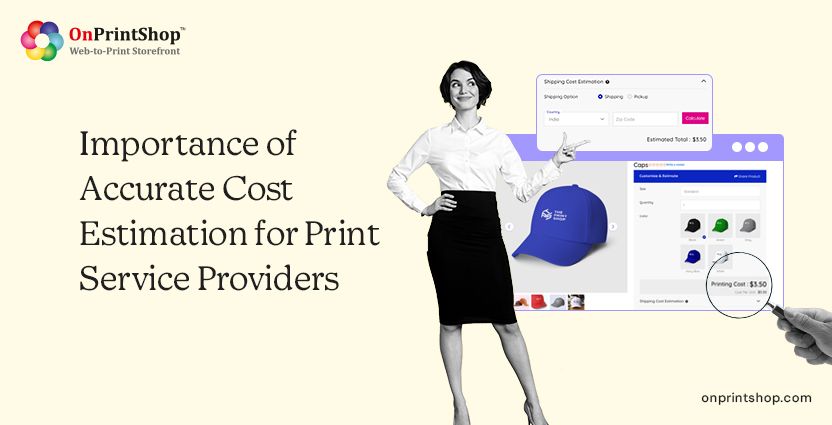
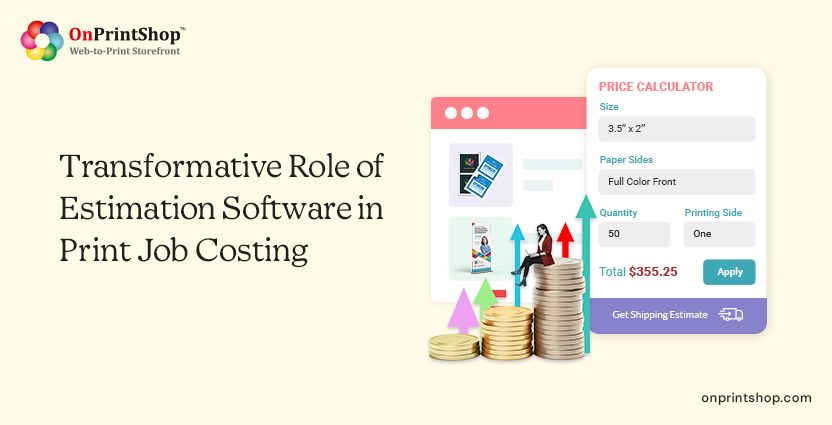
Print estimating software is a specialized digital tool that automates the cost calculation process for print jobs. Instead of manually working through spreadsheets, estimators input job variables such as paper type, quantity, ink coverage, finishing options, labor rates, and overhead, and the software instantly calculates an accurate, profitable quote.
Unlike generic spreadsheets, print estimating software applies predefined pricing rules, accounts for material price fluctuations, supports multi-product quoting, and generates professional quote documents. Spreadsheets break down with complexity and scale; estimating software is built for it.
Print estimating software is distinct from a Print MIS (Management Information System), though they often work together. Estimating software focuses on the front-end cost calculation and quoting process. MIS covers the full operational lifecycle of a job, from order entry through scheduling, production, and invoicing. Some platforms offer both capabilities; others specialize in one.

Print Estimating Software vs Print MIS: What's the Difference?
This is the most common source of confusion when print businesses evaluate software. Here is a direct comparison between a print estimation tool and a print MIS tool:
When to Use Print Estimating Software
Choose estimating software when your primary pain point is slow or inaccurate quoting. If your sales team is losing jobs because quotes take too long, or your margins are eroding because of underquoting, a dedicated estimating solution delivers fast ROI.
When to Use a Print MIS
Choose a full MIS when your operational challenges extend beyond quoting into scheduling, job tracking, production management, and financial reporting. MIS investments are larger and take longer to implement but handles broader operations like an extensive workflow automation software.
The Hybrid Approach
Most growing print businesses benefit from a hybrid approach: a purpose-built print estimating tool integrated with a Print MIS. This gives you speed at the quoting stage and full operational visibility downstream. Many modern platforms support this integration natively.
Who Needs Print Estimating Software?
Print estimating software is not a one-size-fits-all solution. Here is how different print segments benefit:
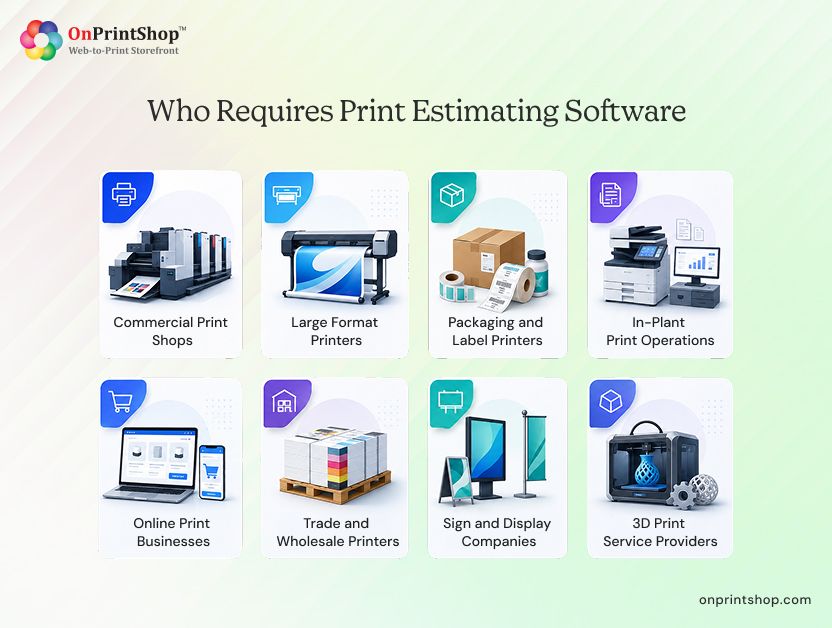
Commercial Print Shops
High-volume businesses handling offset and digital jobs with complex substrate, ink, and finishing combinations. Estimating software reduces quote time from hours to under 15 minutes and eliminates manual calculation errors.
Large Format Printers
Wide-format operations dealing with variable sizes, diverse substrates, and specialized finishing. Automated estimating handles the non-standard dimensions and substrate pricing that spreadsheets struggle with.
Packaging and Label Printers
Packaging involves die-cut shapes, multi-layer materials, and specialized finishing. Dedicated estimating tools handle these variables accurately and protect margins on complex jobs.
In-Plant Print Operations
Corporate in-plant departments that need to chargeback costs internally benefit from accurate job costing and estimated-vs-actual reporting.
Online Print Businesses
Web-to-print operations need real-time, customer-facing pricing. Estimating software powers the online print calculator that generates instant quotes on storefronts.
Trade and Wholesale Printers
Managing tiered pricing for resellers and trade customers requires dynamic pricing logic that manual methods cannot support reliably.
Sign and Display Companies
Variable sizes, short runs, and diverse substrates make manual estimating impractical. Automated estimating handles the complexity efficiently.
3D Print Service Providers
Material consumption, machine time, and post-processing costs require purpose-built estimating logic that generic tools do not support.
Key Features of Print Estimating Software
Not all estimating tools are equal. These are the 10 essential features to look for when evaluating print estimating software:
1. Dynamic Variable Cost Engine
The software must allow estimators to input and configure every cost variable: substrate type, paper weight, print size, ink coverage, quantity, finishing, labor, and overhead. Job complexity should not limit accuracy.
2. Job Costing and Estimated vs Actual Reporting
This is non-negotiable. The software should compare the original estimate against actual production costs after the job is complete. This data reveals where margins are lost and helps improve future quoting accuracy.
3. Multi-Channel Quoting
Estimating software must support quotes delivered across email, web storefront, PDF, and customer portal. Customers expect quotes through the channel of their choice, and the system should handle all of them from a single interface.
4. Bindery Estimating
Finishing is a major cost driver in print. The software must accurately calculate costs for cutting, folding, laminating, binding, stitching, die-cutting, and embossing, including setup time and material waste.
5. Quote-to-Order Automation
Approved quotes should convert directly into production orders without re-keying data. This way a bespoke print order management software eliminates transcription errors and speeds up the handoff from sales to production.
6. Material Price Adjustment and Rule-Based Pricing
When substrate, ink, or finishing costs change, the software should automatically apply updated prices to new quotes. Rule-based pricing logic ensures consistency and margin protection.
7. Custom Pricing Models and Quote Expiry Controls
Different customers and job types need different pricing structures. The software should support markup by product, customer tier, or order volume. Quote expiry dates protect you from fulfilling outdated quotes during price increases.
8. Repeat Job and Template Management
For managing recurring orders in bulk, the software should store job histories and allow quick quote duplication with edits. This reduces re-estimation time for repeat customers dramatically.
9. Detailed Cost Breakdown and Transparent Quote Documents
Customers want to understand what they are paying for. The software should generate professional quote documents with itemized cost breakdowns covering materials, print process, finishing, and delivery.
10. Web-to-Print and MIS Integration
Estimating software must integrate with your customer facing web-to-print storefront for real-time customer-facing pricing, and with your MIS for seamless job handoff. API-based integrations with accounting and CRM systems are also valuable.

Types of Print Estimating Software
The market offers nine distinct types of print estimating solutions. Understanding them helps you match the right tool to your operation:
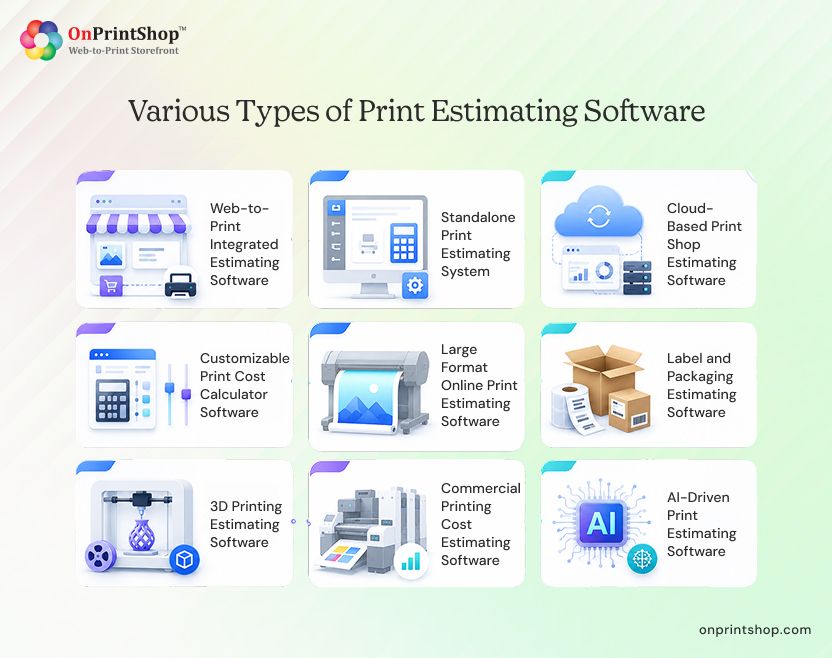
1. Web-to-Print Integrated Estimating Software
Built directly into web-to-print storefronts, this type delivers real-time pricing to online customers as they configure their jobs. It provides a seamless experience from product selection through checkout.
2. Standalone Print Estimating System
Operates independently from other systems, providing core cost calculation capabilities. Best suited to smaller print shops with simpler job types and lower integration requirements.
3. Cloud-Based Print Shop Estimating Software
Accessible from any browser, cloud-based solutions support remote teams and multi-location operations. Automatic updates and lower upfront costs make them attractive to growing businesses.
4. Customizable Print Cost Calculator Software
Highly configurable platforms that allow printers to define their own pricing logic, markup rules, material costs, and estimation templates. Ideal for operations with non-standard products or complex pricing structures.
5. Large Format Online Print Estimating Software
Designed specifically for wide-format print products including banners, posters, wall graphics, and vehicle wraps. Handles variable dimensions, specialty substrates, and outdoor finishing accurately.
6. Label and Packaging Estimating Software
Handles non-standard die-cut shapes, multi-layer materials including film, foil, and adhesives, and specialized finishes like spot UV and embossing. Packaging complexity requires purpose-built logic.
7. 3D Printing Estimating Software
Calculates costs based on material consumption by volume, machine time, energy usage, and post-processing steps including sanding, polishing, and painting. Not applicable to traditional print but essential for additive manufacturing services.
8. Commercial Printing Cost Estimating Software
Built for high-volume, multi-process commercial printing platforms. Handles offset, digital, and hybrid production workflows with complex setup times, material utilization, and overhead allocation.
9. AI-Driven Print Estimating Software
Uses machine learning to analyze historical job data, market pricing trends, and material cost fluctuations to generate predictive cost estimates. AI improves accuracy over time as more job data is fed into the system.
Which type is right for your business? Use this decision table:
Benefits of Print Estimating Software: Backed by Data
The business case for print estimating software is well supported by industry data. Here is how estimation software improves print job costing:
1. Faster Quote Turnaround
Slow quoting is one of the challenges faced by North American print service providers, and manual quoting typically takes 2 to 4 hours per job. Print estimating software reduces this to under 15 minutes, a reduction of 85 to 90 percent. Faster quotes win more jobs in competitive markets.
2. Reduction in Manual Work
Automation eliminates manual data entry, spreadsheet updating, and cost recalculation. Businesses report a 40 to 50 percent reduction in estimating labor hours after implementation.
3. Improved Profit Margin Protection
Underquoting is one of the biggest profit leaks in print. Accurate estimating with complete cost capture prevents margin erosion and protects a higher net profit on estimated jobs.
4. Scalability Without Headcount
As job volumes grow, printing workflow automation handles the increase without requiring additional estimating staff. Businesses scale revenue without proportionally scaling costs.
5. Fewer Quoting Errors and Disputes
Automated calculations reduce human error. Itemized quotes improve transparency and reduce customer disputes over pricing, cutting dispute-related write-offs.
6. Better Win Rate on Quotes
Faster, professional, and accurate quotes improve customer confidence and increase quote-to-order conversion rates. Businesses report win rate improvements of 15 to 25 percent after adopting estimating software.
7. Estimated vs Actual Reporting for Continuous Improvement
By comparing estimated costs to actual production costs at the job level, print managers can identify systematic underpricing and correct pricing models before margin losses compound.
8. Reduced Dependency on Senior Estimators
Standardized pricing rules and templates allow junior staff to produce accurate quotes without extensive experience. This reduces the business risk of relying on a single senior estimator and accelerates onboarding.
The Role of AI in Print Estimating Software
Artificial intelligence is changing how print estimating software generates, refines, and improves quotes. Here is what AI actually does in a modern estimating context and where human oversight remains essential.
AI Capabilities in Print Estimating
- Predictive Cost Modeling: AI analyzes historical job data to identify cost patterns and predict future job costs with greater accuracy than rule-based systems alone.
- Dynamic Market Price Adjustment: Machine learning models track raw material and substrate price trends, automatically adjusting estimates to reflect current market conditions.
- Demand-Based Pricing Suggestions: AI can recommend optimal pricing based on market demand, competitor positioning, and your historical win rates at different price points.
- Job Complexity Recognition: AI identifies patterns in complex job specifications and flags potential costing gaps before quotes are sent.
- Quote Optimization: AI suggests alternative configurations, substrates, or quantities that maintain profitability while improving customer value.
ROI Impact of AI in Estimating
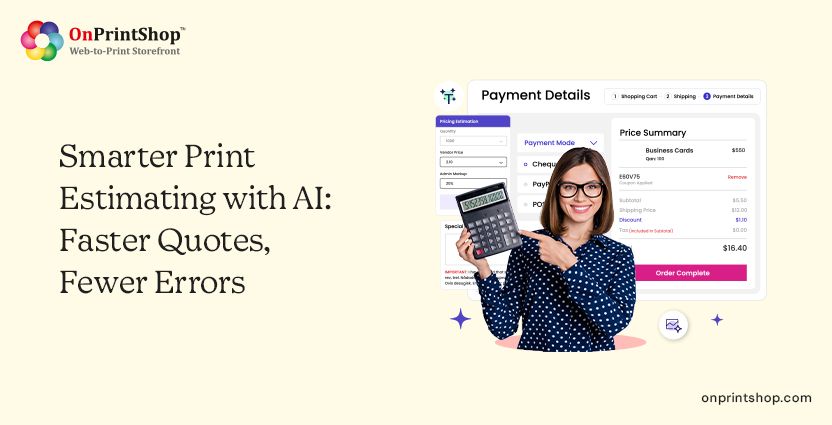
AI-powered estimating features deliver measurable results. Businesses using AI-enhanced estimating tools report up to 30 percent improvement in quote accuracy on complex jobs, and 20 to 35 percent faster quote generation on standard job types compared to rule-based automation alone.
The compounding effect is significant: better accuracy reduces post-job write-offs, faster quoting increases the volume of quotes generated, and smarter pricing recommendations improve win rates.
Where Human Oversight Remains Essential
Although AI is reshaping the print industry, AI is still a decision-support tool, not a replacement for experienced estimators. Human review is critical for:
- Non-standard or first-time job specifications: AI performs best on jobs similar to historical data. Unusual specifications require human judgment.
- High-value contracts: Large quotes should always have human sign-off regardless of AI confidence scores.
- Customer relationship pricing: Strategic pricing decisions involving long-term customer relationships require commercial judgment that AI cannot replicate.
- Material price validation: AI price adjustments should be reviewed against actual supplier invoices regularly to prevent drift.
How to Choose the Right Print Estimating Software
Use this 10-point framework to evaluate any print estimating solution before you invest:
- Define your primary pain point first. Is it quote speed, accuracy, scalability, or customer-facing pricing? The answer determines which feature set to prioritize.
- Assess compatibility with your existing print workflow. The software must fit your current process without requiring a complete operational overhaul.
- Evaluate integration capabilities. Confirm the solution integrates with your web-to-print storefront, MIS, CRM, and accounting software through documented APIs.
- Verify support for your job types. A large format operation has different requirements than a commercial printer. Confirm the software handles your specific substrates, finishing, and product configurations.
- Test the user interface with your team. A powerful tool that your estimating staff cannot navigate efficiently will not deliver ROI. Require a hands-on trial before signing.
- Examine the estimated vs actual reporting capability. This feature is essential for continuous margin improvement and should be a standard part of the platform, not an add-on.
- Assess customization depth. Can you configure markup rules, pricing templates, and cost variables to match your exact pricing logic, or are you constrained by the vendor's defaults?
- Review the total cost of ownership. Factor in subscription fees, setup costs, training, integration development, and ongoing support. Compare this against your projected ROI.
- Check vendor support quality. Request references from similar print businesses. Ask about implementation support, response times for issues, and update frequency.
- Confirm scalability. The solution must grow with your business. Check whether adding new product lines, pricing models, or user seats incurs significant additional cost.
Print Estimating Software ROI: What Print Businesses Can Expect
The return on investment from print estimating software is typically realized within 6 to 12
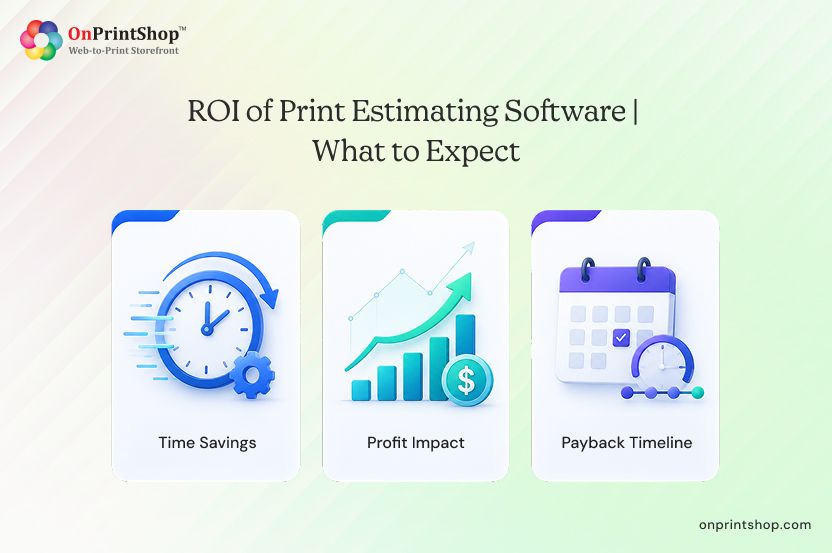
Time Savings
If your team produces 20 quotes per week at an average of 3 hours each, that is 60 hours of estimating labor weekly. Reducing this by 80 percent through automation frees 48 hours per week, or roughly 1.2 full-time equivalent roles. At an average estimator cost of $55,000 per year, that represents over $65,000 in recoverable labor capacity annually.
Profit Impact
Underquoting by just 3 percent on a $2 million annual revenue base costs $60,000 in margin. Accurate estimating software that closes this gap pays for itself many times over in the first year alone.
Payback Timeline
Most print businesses achieve full payback within 6 to 12 months. Businesses with higher quote volumes or complex job types often see payback within 90 days due to the volume impact of faster quoting.
Before vs After: A Representative Example
Common Mistakes to Avoid with Print Estimating Software
Even the best print estimating software delivers poor results if implementation and ongoing management are handled poorly. Avoid these seven common mistakes:
1. Skipping Proper Requirements Analysis
Many print businesses select and implement software without mapping their specific job types, workflow stages, and pricing rules first. This results in a system that does not match operational reality, leading to workarounds and underutilization.
2. Not Involving Key Stakeholders
Estimating software affects sales, production, and finance teams simultaneously. Implementing without their input creates resistance to adoption and introduces gaps in the workflow that the tool was supposed to fix.
3. Failing to Maintain Material Price Updates
If your substrate, ink, and finishing costs in the software do not match your actual supplier prices, every quote generated will be inaccurate. Schedule regular price reviews, at minimum monthly, to keep cost data current.
4. Over-Reliance on AI Without Human Review
AI-driven estimating features improve accuracy but require human oversight. Relying entirely on AI recommendations for complex or high-value jobs without review introduces significant risk, particularly for jobs outside the AI's training data.
5. Ignoring Integration with Other Systems
An estimating tool that operates in isolation forces manual data transfer to your MIS, CRM, and accounting systems. This recreates the errors and inefficiencies you invested in the software to eliminate.
6. Neglecting Staff Training
Estimating software has a learning curve. Inadequate training results in staff reverting to spreadsheets or producing inaccurate quotes because they do not understand how to configure job parameters correctly.
7. Failing to Monitor and Optimize After Go-Live
Implementation is not the finish line. Not using an auto-generating reporting and analytics software Regular review of estimated vs actual cost reports, quote accuracy rates, and user feedback is essential for continuous improvement and sustained ROI.
Steps to Implement Print Estimating Software
A structured implementation process reduces risk and accelerates time to value. Here is a proven 6-step process with a realistic timeline of 2 to 6 weeks:
Step 1: Requirements Mapping (Week 1)
Document all job types, substrates, finishing options, pricing structures, and workflow stages. Identify which teams will use the system and what integrations are required. This document becomes the configuration blueprint.
Step 2: Data Preparation (Week 1 to 2)
Gather and validate all cost data: substrate prices, ink costs, labor rates, overhead allocations, and finishing charges. Clean and standardize this data before importing it into the new system. Garbage in means garbage out.
Step 3: System Configuration and Customization (Week 2 to 3)
Configure pricing rules, markup structures, estimation templates, and product configurations in the software. This stage should involve your most experienced estimator to validate the logic against real jobs.
Step 4: Integration Setup (Week 3 to 4)
Connect the estimating software to your web-to-print storefront, MIS, CRM, and accounting platforms. Test data flows in both directions and validate that quotes created in estimating software transfer correctly to downstream systems.
Step 5: User Training and Parallel Running (Week 4 to 5)
Train all users on the new system. Run the new software in parallel with your existing process for 1 to 2 weeks, comparing outputs to validate accuracy. Address any configuration gaps before full cutover.
Step 6: Go-Live and Ongoing Optimization (Week 5 to 6 and beyond)
Cut over to the new system and decommission manual processes. Establish a monthly review cadence covering estimated vs actual reporting, material price updates, and user feedback. Continuous optimization is what converts a software investment into sustained competitive advantage.
ConclusionPrint estimating software is no longer optional for print businesses that want to compete on speed, accuracy, and profitability. The evidence is clear: automation reduces quote turnaround by up to 90 percent, protects 3 to 5 percent in margin, and pays back within 6 to 12 months.The right platform will integrate with your AI-powered web-to-print solution and MIS, support your specific job types, and give you the estimated vs actual reporting you need to continuously improve. The wrong choice, or no choice, costs you more every month you delay.OnPrintShop's advanced print estimating software is built for print businesses that are serious about profitable growth. Explore the platform and schedule a demo today to see how it fits your operation.