



Blog Summary: Label printing spans five distinct production methods and dozens of material choices, and picking the right combination can open a profitable new revenue line for any print shop. This guide breaks down the methods, materials, and applications print businesses need to evaluate before adding labels to their catalog.
Label printing is the process of producing adhesive-backed labels for products, packaging, shipping, and compliance using methods such as digital, flexographic, offset, screen, or thermal printing. For commercial printers and sign shops looking to diversify, labels are one of the most repeatable order categories in the industry, since brands reorder the same SKU on a predictable cycle. Industry market shows steady demand growth for pressure sensitive and digital labels as e-commerce and food traceability rules expand.
Many shops manage this repeat order volume with advanced label and sticker printing software that automates quoting, artwork approval, and reorder tracking. This guide walks through the core production methods, materials, and applications a print business needs to understand before adding label printing to its service mix.
Why Label Printing Is a Valuable Opportunity for Print Businesses
Labels are one of the highest repeat product categories in commercial print. Once a brand approves artwork and stock, it reorders the same label at predictable intervals, which creates steady recurring revenue instead of one-off jobs. Adding label printing also requires a lower equipment investment than many print businesses expect, since digital label presses and finishing equipment scale from entry-level to industrial volumes.
Industry research points to strong sector growth, with the global label printing market projected to expand from roughly 55 billion dollars in 2026 to more than 67 billion dollars by 2031. For a print shop with existing prepress and finishing capability, this growth curve makes labels a practical way to diversify beyond signage, packaging, or general commercial print work, aligning with the latest print industry trends shaping the future of the industry.

How the Label Printing Process Works: Step by Step
Label production follows a consistent sequence regardless of the printing method used. Understanding each stage helps a print business identify where to invest first.
- File setup and prepress: Artwork is checked for bleed, resolution, and color accuracy before printing.
- Substrate selection: The shop chooses paper, vinyl, polyester, or another material based on the label's end use.
- Print method: Digital, flexo, offset, screen, or thermal presses apply the design to the substrate.
- Finishing: Lamination or varnish is added for durability and visual finish.
- Die-cutting or kiss-cutting: Labels are cut to shape, either through the backing or just the face stock.
- Application: Finished labels are applied to products, packaging, or shipments.
Types of Label Printing Methods and When to Use Each
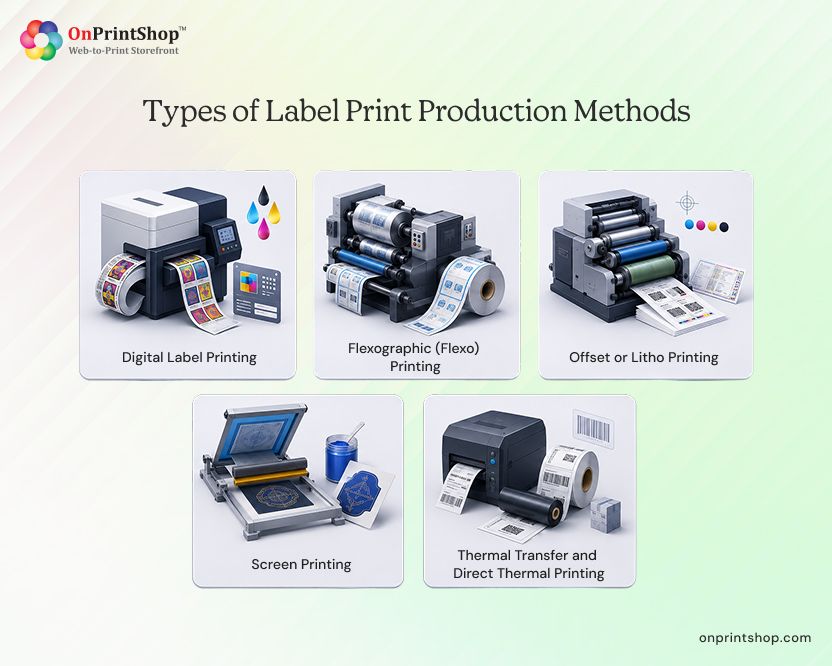
Five production methods cover most label printing jobs. Each suits a different run length, budget, and finish requirement.
Digital Label Printing
Digital label printing uses inkjet or toner-based presses with no plates required, which makes it cost-effective for short runs and variable data. It is best suited to small businesses, frequent artwork changes, and fast turnaround orders.
Flexographic (Flexo) Printing
Flexographic printing uses flexible relief plates wrapped around a cylinder, allowing high-speed production at large volumes. It is the standard choice for brands running 5,000 units or more per order.
Offset or Litho Printing
Offset printing transfers ink from a plate to a rubber blanket before it reaches the substrate, producing sharp detail and consistent color across large flat-label runs. It works well for high-quality labels ordered in bulk.
Screen Printing
Screen printing pushes ink through a mesh stencil directly onto the label material, which allows thick ink deposits and specialty finishes. Print businesses use it for industrial labels that need extra durability.
Thermal Transfer and Direct Thermal Printing
Thermal transfer uses a ribbon to transfer ink under heat, while direct thermal uses heat-sensitive paper with no ribbon at all. Both are common for shipping, barcode, and logistics labels that need to print on demand.
Common Types of Labels Based on Their Applications
Beyond production method, labels are also categorized by what they are used for. Recognizing these categories helps a print business scope a customer's actual need.
- Product and packaging labels: Branding and product information applied directly to packaging or containers.
- Shipping and mailing labels: Address, tracking, and barcode labels used in logistics and fulfillment.
- Promotional and branding labels: Stickers and decals used for marketing, events, and giveaways.
- Compliance and regulatory labels: Food, pharmaceutical, and chemical labels that must meet legal disclosure requirements.
- Asset and barcode or tracking labels: Durable labels used for inventory, equipment, and asset management.
What Are the Common Label Printing Materials and Their Best Uses?
Material choice determines how a label performs in real-world conditions such as moisture, temperature, and handling. The right substrate depends on where and how long the label needs to last.
Label Finishes and Shapes That Enhance Appearance and Durability
Finish and shape affect both durability and shelf appeal. Matte finishes give a soft, non-reflective look, gloss adds shine and contrast, and lamination adds a protective layer for outdoor or high-handling labels. Shape options range from standard rectangles and circles to fully custom outlines produced through die-cut label and sticker customization, where die-cut labels are cut through both the face and backing while kiss-cut labels are cut only through the face stock.
Setting up a web-to-print storefront allows label and sticker print businesses to present these finishing and shape options as selectable choices within the online ordering workflow.

Industries That Commonly Use Label Printing
Nearly every industry relies on labels in some form. The categories below represent the largest opportunities for a print business adding labels to its catalog.
Food and beverage: Nutrition, ingredient, and allergen labeling required by regulation. Cosmetics and personal care: Branding and ingredient disclosure labels that often pair with an advanced packaging design software for a coordinated look.
- Retail and DTC: Product identification and branding for shelf and online sales.
- Logistics and shipping: Barcode and address labels for fulfillment operations.
- Industrial and asset tracking: Durable tags for equipment, inventory, and maintenance records.
- Education and promotional: Event stickers, giveaways, and campus or classroom labeling.

How to Start Offering Label Printing Services in Your Print Business
Print businesses do not need to overhaul their operation to add label printing. Most shops start by evaluating existing customer demand, since many current clients already buy labels from a separate vendor.
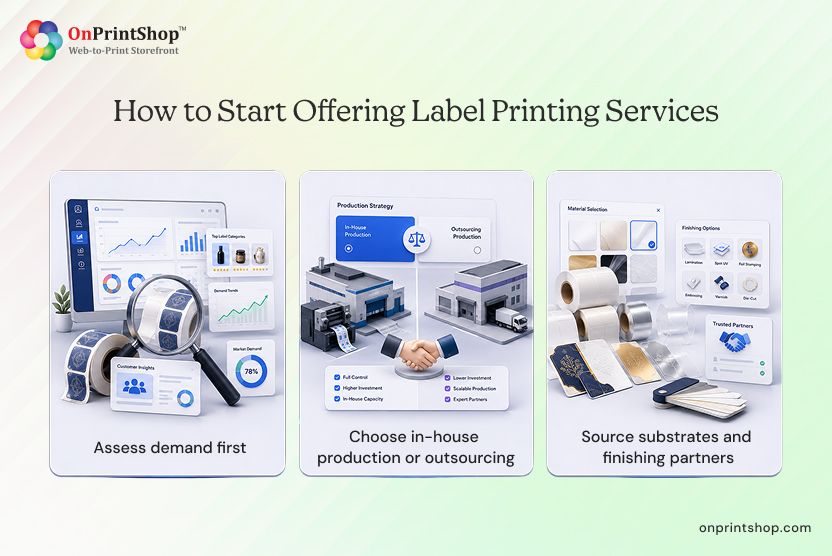
- Assess demand first: Survey existing customers to see who already orders labels elsewhere.
- Choose in-house production or outsourcing: Digital presses have a lower entry cost than flexo or offset equipment.
- Source substrates and finishing partners: Establish reliable vendors for vinyl, laminate, and die-cutting before taking large orders.
Move ordering online: Putting up an online label and sticker storefront lets customers upload artwork, get instant pricing, and reorder without manual quoting, which matters most once label volume grows.
Key Terms
Kiss-cut: Cutting only through the label face material, leaving the backing sheet intact.
Die-cut: Cutting completely through both the label and backing into a custom shape.
Flexo: Flexographic printing, a method using flexible relief plates suited to high-volume runs.
Substrate: The base material a label is printed on, such as paper, vinyl, or polyester.
Laminate: A protective film or coating applied over a label for added durability.
ConclusionLabel printing gives print businesses a way to add a high-repeat, relatively low-barrier product line without overhauling existing operations. Understanding the production methods, materials, and industry applications covered here is the first step toward deciding where labels fit into your service mix.Many shops start by piloting one or two label types, such as product or shipping labels, before expanding into compliance or specialty categories with an AI-powered web-to-print storefront for label and sticker printers to manage the added order volume. If you are ready to see how a web-to-print platform handles label and sticker orders end to end, schedule a demo with the OnPrintShop team.